A US expat in Wuxi explains the clash: "mockery" and "historical argument"
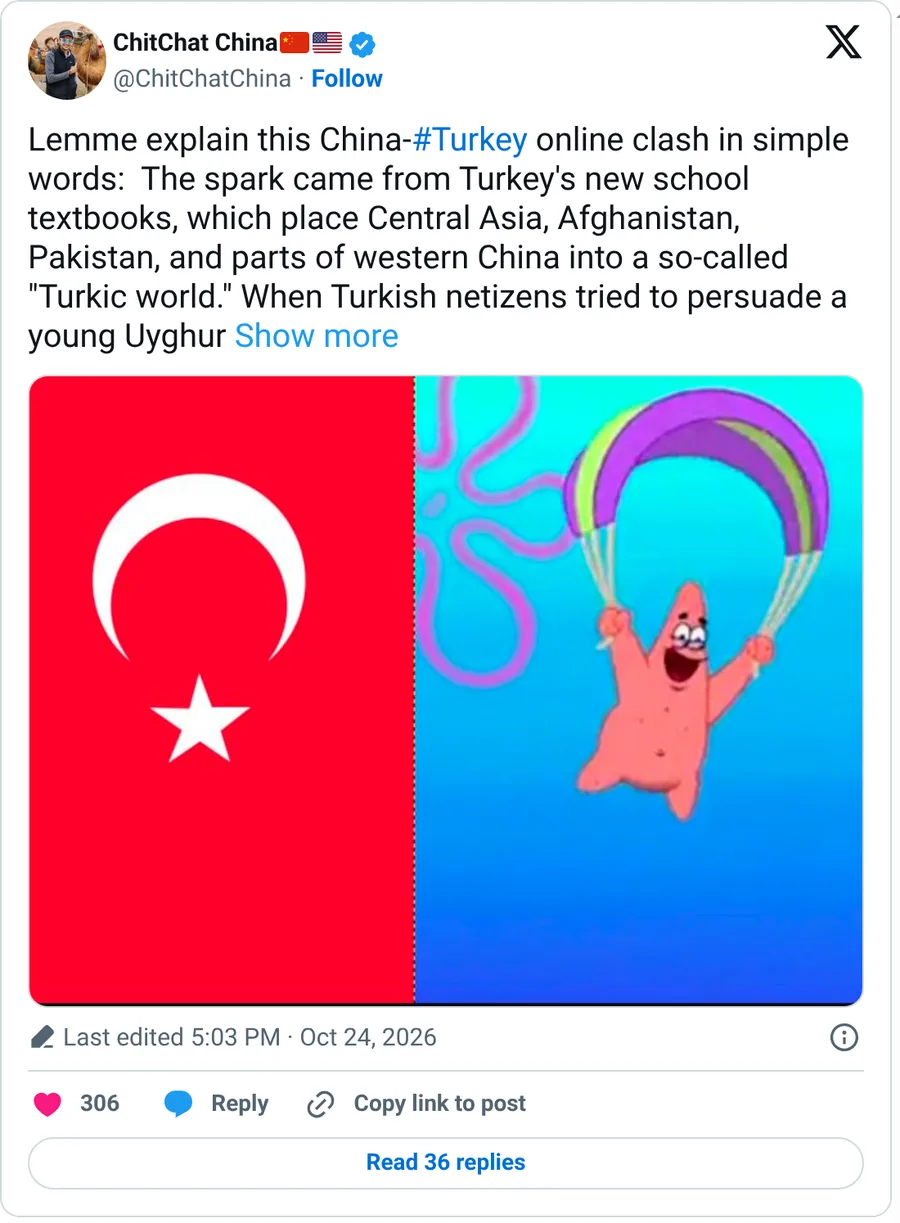
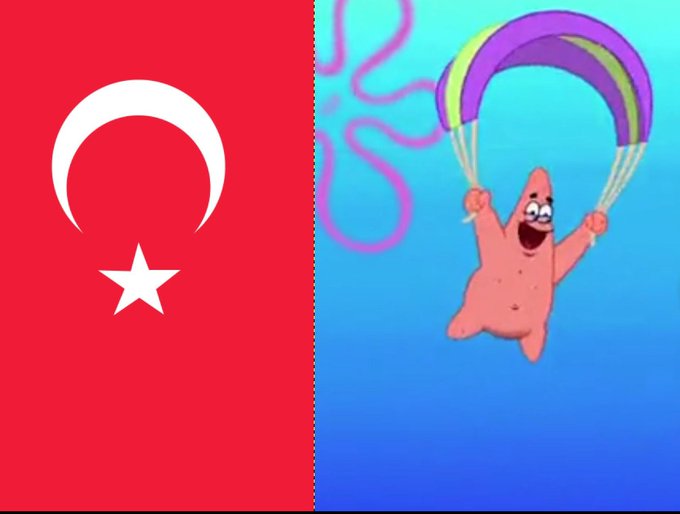
@ChitChatChina (display name "ChitChat China🇨🇳🇺🇸", ~15K followers, profile location Wuxi; his bio describes him as an American "laowai" who has lived in China for 16 years) posted on 24 Oct at 17:03 (UTC+3): "Lemme explain this China-#Turkey online clash in simple words:" He traced the spark to Türkiye's new school textbooks, which he said place Central Asia, Afghanistan, Pakistan and parts of western China in a so-called "Turkic world", and to Turkish users urging a young Uyghur woman to "return to her Turkic roots", to which she replied that she is Chinese. He wrote that Chinese users answered with two weapons: "The first was mockery — a meme merging the Turkish crescent-and-star with #PatrickStar from #SpongeBob SquarePants (below), which spread rapidly and visibly rattled the other side." The second, he said, was historical argument: that the Great Wall predates Turkic states by centuries, and that modern Anatolian Turks are genetically closer to Greeks and Armenians than to ancient Turkic peoples (~51K views, 399 likes, 45 replies). The attached image is the Patrick flag meme. His account of the origin differs from those in other entries on this site; these are the poster's own characterisations.
@ChitChatChina — United States (expat living in China) (inferred)
Country is the archive’s own reading of public profile and language signals unless it says otherwise; “inferred” entries can be wrong. It describes an account, not a nation.
Machine-assisted translations; check the original posts for exact wording.
简体中文
无锡的美国“老外”博主解读这场冲突:“嘲讽”与“历史论证”
@ChitChatChina(显示名“ChitChat China🇨🇳🇺🇸”,约 1.5 万粉丝,资料所在地无锡;简介自称住在无锡、在华生活 16 年的美国“老外”)10 月 24 日 17:03(UTC+3)发帖:“Lemme explain this China-#Turkey online clash in simple words:”(“我用简单的话解释一下这场中国—土耳其网络冲突:”)。他认为导火索是土耳其新版中小学教科书把中亚、阿富汗、巴基斯坦和中国西部部分地区划入所谓“突厥世界”,以及土耳其网民劝一名年轻维吾尔女子“回归突厥之根”,而她回答自己是中国人。他写道,中国网民用了两种武器:“The first was mockery — a meme merging the Turkish crescent-and-star with #PatrickStar from #SpongeBob SquarePants (below), which spread rapidly and visibly rattled the other side.”(“第一种是嘲讽——把土耳其星月旗和《海绵宝宝》里的派大星合在一起的梗图(见下图),迅速传开,明显让对方乱了阵脚。”);第二种是历史论证:长城比突厥政权早了数百年,现代安纳托利亚土耳其人在基因上更接近希腊人和亚美尼亚人,而非古代突厥人(约 5.1 万浏览、399 赞、45 回复)。配图为派大星国旗梗图。他对起因的说法与本站其他条目不同;以上为发帖人的描述。
@ChitChatChina(顯示名“ChitChat China🇨🇳🇺🇸”,約 1.5 萬粉絲,資料所在地無錫;簡介自稱住在無錫、在華生活 16 年的美國“老外”)10 月 24 日 17:03(UTC+3)發帖:“Lemme explain this China-#Turkey online clash in simple words:”(“我用簡單的話解釋一下這場中國—土耳其網絡衝突:”)。他認為導火索是土耳其新版中小學教科書把中亞、阿富汗、巴基斯坦和中國西部部分地區劃入所謂“突厥世界”,以及土耳其網民勸一名年輕維吾爾女子“迴歸突厥之根”,而她回答自己是中國人。他寫道,中國網民用了兩種武器:“The first was mockery — a meme merging the Turkish crescent-and-star with #PatrickStar from #SpongeBob SquarePants (below), which spread rapidly and visibly rattled the other side.”(“第一種是嘲諷——把土耳其星月旗和《海綿寶寶》裏的派大星合在一起的梗圖(見下圖),迅速傳開,明顯讓對方亂了陣腳。”);第二種是歷史論證:長城比突厥政權早了數百年,現代安納托利亞土耳其人在基因上更接近希臘人和亞美尼亞人,而非古代突厥人(約 5.1 萬瀏覽、399 贊、45 回覆)。配圖為派大星國旗梗圖。他對起因的說法與本站其他條目不同;以上為發帖人的描述。
Wuxi’de yaşayan bir Amerikalı çatışmayı anlatıyor: “alay” ve “tarihsel argüman”
@ChitChatChina (görünen ad “ChitChat China🇨🇳🇺🇸”, ~15 bin takipçi, profil konumu Wuxi; biyografisinde kendini 16 yıldır Çin’de yaşayan Amerikalı bir “laowai” [yabancı] olarak tanıtıyor) 24 Ekim saat 17:03’te (UTC+3) paylaşım yaptı: “Lemme explain this China-#Turkey online clash in simple words:” (“Bu Çin–Türkiye internet çatışmasını basit sözlerle anlatayım:”). Kıvılcımın, onun ifadesiyle Orta Asya’yı, Afganistan’ı, Pakistan’ı ve Batı Çin’in bazı kısımlarını sözde bir “Türk dünyası”na dahil eden Türkiye’nin yeni okul kitaplarından ve Türk kullanıcıların genç bir Uygur kadını “Türk köklerine dönmeye” ikna etmeye çalışmasından, kadının da Çinli olduğunu söylemesinden çıktığını yazdı. Çinli kullanıcıların iki silahla karşılık verdiğini belirtti: “The first was mockery — a meme merging the Turkish crescent-and-star with #PatrickStar from #SpongeBob SquarePants (below), which spread rapidly and visibly rattled the other side.” (“Birincisi alaydı — Türk ay-yıldızını SüngerBob’daki Patrick Star ile birleştiren bir mim (aşağıda); hızla yayıldı ve karşı tarafı gözle görülür biçimde sarstı.”) İkincisi ise ona göre tarihsel argümandı: Çin Seddi’nin Türk siyasi oluşumlarından yüzyıllar önce yapıldığı ve modern Anadolu Türklerinin genetik olarak eski Türk halklarından çok Yunanlara ve Ermenilere yakın olduğu (~51 bin görüntülenme, 399 beğeni, 45 yanıt). Ekteki görsel Patrick’li bayrak mimi. Kökene dair anlatımı sitedeki diğer kayıtlardakinden farklı; bunlar paylaşımı yapanın kendi nitelendirmeleridir.
Popüler yanıt: Çinlilerden nesiller boyu sürecek, soykırım düzeyinde bir hakaret. Dünyanın geri kalanı Türklerin cevabını bekliyor. Aynı derecede yıkıcı bir yanıt gelme ihtimali düşük.
日本語
無錫在住の米国人が衝突を解説:「嘲笑」と「歴史的議論」
@ChitChatChina(表示名「ChitChat China🇨🇳🇺🇸」、フォロワー約1.5万人、プロフィール所在地は無錫。プロフィールでは在中16年のアメリカ人「老外」と自称)は10月24日17:03(UTC+3)に投稿した:「Lemme explain this China-#Turkey online clash in simple words:」(「この中国とトルコのネット上の衝突を簡単な言葉で説明しよう:」)。彼によれば、発端はトルコの新しい教科書が中央アジア、アフガニスタン、パキスタン、中国西部の一部をいわゆる「テュルク世界」に含めたこと、そしてトルコのネットユーザーが若いウイグル人女性に「テュルクのルーツに戻れ」と説得しようとし、彼女が自分は中国人だと答えたことだという。中国のネットユーザーは二つの武器で応じたとして、「The first was mockery — a meme merging the Turkish crescent-and-star with #PatrickStar from #SpongeBob SquarePants (below), which spread rapidly and visibly rattled the other side.」(「一つ目は嘲笑――トルコの三日月と星をスポンジ・ボブのパトリック・スターと組み合わせたミーム(下図)で、瞬く間に広まり、相手側を明らかに動揺させた」)と書いた。二つ目は歴史的議論で、万里の長城はテュルク系の政治体より数世紀古く、現代のアナトリアのトルコ人は古代テュルク系民族よりもギリシャ人やアルメニア人に遺伝的に近いというものだという(約5.1万閲覧、399いいね、45返信)。添付画像はパトリック国旗のミーム。発端についての彼の説明は本サイトの他の項目とは異なる。いずれも投稿者自身の見方である。
@ChitChatChina(표시 이름 「ChitChat China🇨🇳🇺🇸」, 팔로워 약 1.5만 명, 프로필 위치 우시. 프로필에서 중국에 16년째 사는 미국인 ‘라오와이’라고 소개)는 10월 24일 17:03(UTC+3)에 게시했다: 「Lemme explain this China-#Turkey online clash in simple words:」(「이 중국–튀르키예 온라인 충돌을 쉬운 말로 설명해 보겠다:」). 그는 발단이 튀르키예의 새 교과서가 중앙아시아, 아프가니스탄, 파키스탄, 중국 서부 일부를 이른바 ‘튀르크 세계’에 포함한 것, 그리고 튀르키예 네티즌들이 젊은 위구르 여성에게 ‘튀르크의 뿌리로 돌아가라’고 설득하자 그녀가 자신은 중국인이라고 답한 것이라고 봤다. 중국 네티즌은 두 가지 무기로 대응했다며 「The first was mockery — a meme merging the Turkish crescent-and-star with #PatrickStar from #SpongeBob SquarePants (below), which spread rapidly and visibly rattled the other side.」(「첫째는 조롱이었다 — 튀르키예의 초승달과 별을 스폰지밥의 뚱이와 합친 밈(아래)이 빠르게 퍼졌고, 상대편을 눈에 띄게 흔들었다.」)라고 썼다. 둘째는 역사적 논증으로, 만리장성은 튀르크 정치체보다 수백 년 앞서며 현대 아나톨리아 튀르키예인은 고대 튀르크 민족보다 그리스인·아르메니아인에 유전적으로 더 가깝다는 것이었다고 했다(약 5.1만 조회, 좋아요 399개, 답글 45개). 첨부 이미지는 뚱이 국기 밈이다. 발단에 대한 그의 설명은 이 사이트의 다른 항목과 다르며, 모두 게시자 자신의 평가다.
인기 답글: 중국인이 날린, 세대를 넘는 제노사이드급 모욕이다. 나머지 세계는 튀르키예의 답을 기다리고 있다. 그만큼 파괴적인 응수가 나올 가능성은 낮다.
Русский
Американец из Уси объясняет конфликт: «насмешка» и «исторический аргумент»
Аккаунт @ChitChatChina (отображаемое имя «ChitChat China🇨🇳🇺🇸», ~15 тыс. подписчиков, местоположение в профиле Уси; в профиле называет себя американским «лаоваем», живущим в Китае 16 лет) опубликовал 24 октября в 17:03 (UTC+3): «Lemme explain this China-#Turkey online clash in simple words:» («Объясню эту китайско-турецкую онлайн-стычку простыми словами:»). По его словам, искрой стали новые турецкие школьные учебники, включающие Центральную Азию, Афганистан, Пакистан и часть Западного Китая в так называемый «тюркский мир», а также попытки турецких пользователей убедить молодую уйгурку «вернуться к тюркским корням», на что она ответила, что она китаянка. Он написал, что китайцы ответили двумя видами оружия: «The first was mockery — a meme merging the Turkish crescent-and-star with #PatrickStar from #SpongeBob SquarePants (below), which spread rapidly and visibly rattled the other side.» («Первым была насмешка — мем, соединяющий турецкие полумесяц и звезду с Патриком из «Губки Боба» (ниже); он быстро разошёлся и заметно выбил противоположную сторону из колеи.») Вторым, по его словам, был исторический аргумент: Великая стена на века старше тюркских государств, а современные анатолийские турки генетически ближе к грекам и армянам, чем к древним тюркам (~51 тыс. просмотров, 399 лайков, 45 ответов). Приложенная картинка — мем с флагом и Патриком. Его версия истоков расходится с другими записями сайта; это оценки самого автора.
Популярный ответ: Оскорбление от китайцев уровня геноцида на поколения. Весь мир ждёт ответа турок. Шансы на столь же сокрушительный ответ невелики.
العربية
أمريكي مقيم في ووشي يشرح الخلاف: «السخرية» و«الحجة التاريخية»
نشر @ChitChatChina (الاسم الظاهر "ChitChat China🇨🇳🇺🇸"، نحو 15 ألف متابع، موقع الملف الشخصي ووشي؛ يصف نفسه في نبذته بأنه «لاوواي» [أجنبي] أمريكي يعيش في الصين منذ 16 عامًا) في 24 أكتوبر الساعة 17:03 (UTC+3): "Lemme explain this China-#Turkey online clash in simple words:" («دعوني أشرح هذا الصدام الإلكتروني بين الصين وتركيا بكلمات بسيطة:»). وأرجع الشرارة إلى كتب مدرسية تركية جديدة قال إنها تضع آسيا الوسطى وأفغانستان وباكستان وأجزاء من غرب الصين ضمن ما يسمى «العالم التركي»، وإلى محاولة مستخدمين أتراك إقناع شابة أويغورية بـ«العودة إلى جذورها التركية»، فردّت بأنها صينية. وكتب أن الصينيين ردّوا بسلاحين: "The first was mockery — a meme merging the Turkish crescent-and-star with #PatrickStar from #SpongeBob SquarePants (below), which spread rapidly and visibly rattled the other side." («الأول كان السخرية — ميم يدمج الهلال والنجمة التركيين مع باتريك ستار من سبونج بوب (أدناه)، انتشر بسرعة وأربك الطرف الآخر بوضوح.») أما الثاني بحسبه فكان الحجة التاريخية: أن سور الصين أقدم من الكيانات السياسية التركية بقرون، وأن أتراك الأناضول المعاصرين أقرب وراثيًا إلى اليونانيين والأرمن منهم إلى الشعوب التركية القديمة (نحو 51 ألف مشاهدة و399 إعجابًا و45 ردًا). والصورة المرفقة هي ميم علم باتريك. وروايته للأصل تختلف عن روايات مداخل أخرى في الموقع؛ وهذه توصيفات صاحب المنشور.
الرد الشائع: إهانة من الصينيين ترقى إلى إبادة تمتد لأجيال. بقية العالم تنتظر ردّ الأتراك، وفرص ردّ مدمّر بالقدر نفسه ضئيلة.
Español
Un estadounidense afincado en Wuxi explica el choque: «burla» y «argumento histórico»
@ChitChatChina (nombre visible «ChitChat China🇨🇳🇺🇸», ~15 mil seguidores, ubicación del perfil Wuxi; su biografía lo presenta como un «laowai» estadounidense que vive en China desde hace 16 años) publicó el 24 de oct. a las 17:03 (UTC+3): «Lemme explain this China-#Turkey online clash in simple words:» («Os explico este choque en línea entre China y Turquía en palabras sencillas:»). Situó la chispa en los nuevos libros de texto turcos, que según él incluyen Asia Central, Afganistán, Pakistán y partes del oeste de China en un supuesto «mundo túrquico», y en usuarios turcos que instaban a una joven uigur a «volver a sus raíces túrquicas», a lo que ella respondió que es china. Escribió que los chinos respondieron con dos armas: «The first was mockery — a meme merging the Turkish crescent-and-star with #PatrickStar from #SpongeBob SquarePants (below), which spread rapidly and visibly rattled the other side.» («La primera fue la burla: un meme que fusiona la media luna y la estrella turcas con Patricio Estrella de Bob Esponja (abajo), que se difundió rápidamente y desconcertó visiblemente al otro bando.») La segunda, según él, fue el argumento histórico: que la Gran Muralla es siglos anterior a las entidades políticas túrquicas y que los turcos anatolios actuales están genéticamente más cerca de griegos y armenios que de los antiguos pueblos túrquicos (~51 mil visualizaciones, 399 Me gusta, 45 respuestas). La imagen adjunta es el meme de la bandera con Patricio. Su versión del origen difiere de la de otras entradas del sitio; son caracterizaciones del propio autor.
Respuesta popular: Un insulto de los chinos de nivel genocidio generacional. El resto del mundo espera la respuesta turca. Pocas probabilidades de una réplica igual de devastadora.
Français
Un Américain installé à Wuxi explique le conflit : « moquerie » et « argument historique »
@ChitChatChina (nom affiché « ChitChat China🇨🇳🇺🇸 », ~15 000 abonnés, localisation du profil Wuxi ; sa bio le présente comme un « laowai » américain vivant en Chine depuis 16 ans) a publié le 24 oct. à 17 h 03 (UTC+3) : « Lemme explain this China-#Turkey online clash in simple words: » (« Je vous explique simplement ce clash en ligne entre la Chine et la Türkiye : »). Selon lui, l’étincelle est venue des nouveaux manuels scolaires turcs, qui placeraient l’Asie centrale, l’Afghanistan, le Pakistan et une partie de l’ouest de la Chine dans un prétendu « monde turc », et d’internautes turcs pressant une jeune Ouïghoure de « revenir à ses racines turques », ce à quoi elle a répondu qu’elle est chinoise. Il a écrit que les Chinois ont répondu avec deux armes : « The first was mockery — a meme merging the Turkish crescent-and-star with #PatrickStar from #SpongeBob SquarePants (below), which spread rapidly and visibly rattled the other side. » (« La première a été la moquerie — un mème fusionnant le croissant et l’étoile turcs avec Patrick l’Étoile de mer de Bob l’éponge (ci-dessous), qui s’est propagé rapidement et a visiblement déstabilisé l’autre camp. ») La seconde, selon lui, a été l’argument historique : la Grande Muraille serait antérieure de plusieurs siècles aux entités politiques turques, et les Turcs anatoliens actuels seraient génétiquement plus proches des Grecs et des Arméniens que des anciens peuples turcs (~51 000 vues, 399 J’aime, 45 réponses). L’image jointe est le mème du drapeau à Patrick. Sa version de l’origine diffère de celles d’autres entrées du site ; ce sont les appréciations de l’auteur.
Réponse populaire: Une insulte des Chinois digne d’un génocide générationnel. Le reste du monde attend la réponse turque. Peu de chances d’une riposte aussi dévastatrice.
Deutsch
Ein US-Amerikaner in Wuxi erklärt den Streit: „Spott“ und „historisches Argument“
@ChitChatChina (Anzeigename „ChitChat China🇨🇳🇺🇸“, ~15.000 Follower, Profilstandort Wuxi; laut Bio ein amerikanischer „Laowai“, der seit 16 Jahren in China lebt) postete am 24. Okt. um 17:03 Uhr (UTC+3): „Lemme explain this China-#Turkey online clash in simple words:“ („Ich erkläre diesen chinesisch-türkischen Online-Streit mal in einfachen Worten:“). Den Funken sah er in neuen türkischen Schulbüchern, die nach seinen Worten Zentralasien, Afghanistan, Pakistan und Teile Westchinas einer sogenannten „türkischen Welt“ zuordnen, und darin, dass türkische Nutzer eine junge Uigurin drängten, „zu ihren türkischen Wurzeln zurückzukehren“, worauf sie antwortete, sie sei Chinesin. Chinesische Nutzer hätten mit zwei Waffen geantwortet: „The first was mockery — a meme merging the Turkish crescent-and-star with #PatrickStar from #SpongeBob SquarePants (below), which spread rapidly and visibly rattled the other side.“ („Die erste war Spott – ein Meme, das den türkischen Halbmond mit Stern mit Patrick Star aus SpongeBob Schwammkopf verschmilzt (unten), sich rasant verbreitete und die Gegenseite sichtlich aus der Fassung brachte.“) Die zweite sei das historische Argument gewesen: Die Große Mauer sei Jahrhunderte älter als turkvölkische Staatsgebilde, und heutige anatolische Türken stünden genetisch Griechen und Armeniern näher als den alten Turkvölkern (~51.000 Aufrufe, 399 Likes, 45 Antworten). Das angehängte Bild ist das Patrick-Flaggen-Meme. Seine Darstellung des Ursprungs weicht von der in anderen Einträgen ab; es sind die Einschätzungen des Accounts.
Beliebte Antwort: Eine Beleidigung der Chinesen, die einem Völkermord über Generationen gleichkommt. Der Rest der Welt wartet auf die türkische Antwort. Die Chancen auf eine ebenso vernichtende Erwiderung stehen schlecht.
About this archive
PATFLAG is a neutral, continuously updated archive of the China–Türkiye online dispute around the Patrick Star flag image: public posts, screenshots and sources, in 11 languages. Colors mark the context of individual public posts, not the position of an entire country. Insulting language in original posts is kept verbatim so the record stays complete; inclusion is not an endorsement of any account. Full timeline