China contextPublic posts · individual views

A 1773 Ottoman manuscript illustration

From 10-15, Chinese-language account @XiTui6673 kept posting an old painting under Turkish users' posts: a chain of fez-wearing men linked together. Wikipedia's "LGBT people and Islam" article captions it "Ottoman Turkish manuscript from 1773" (Wikimedia Commons file; provenance not independently verified). The most-viewed reuse, by @Successfulvqp on 10-19, reached ~98K views and ~2.3K likes. The painting is sexually explicit.
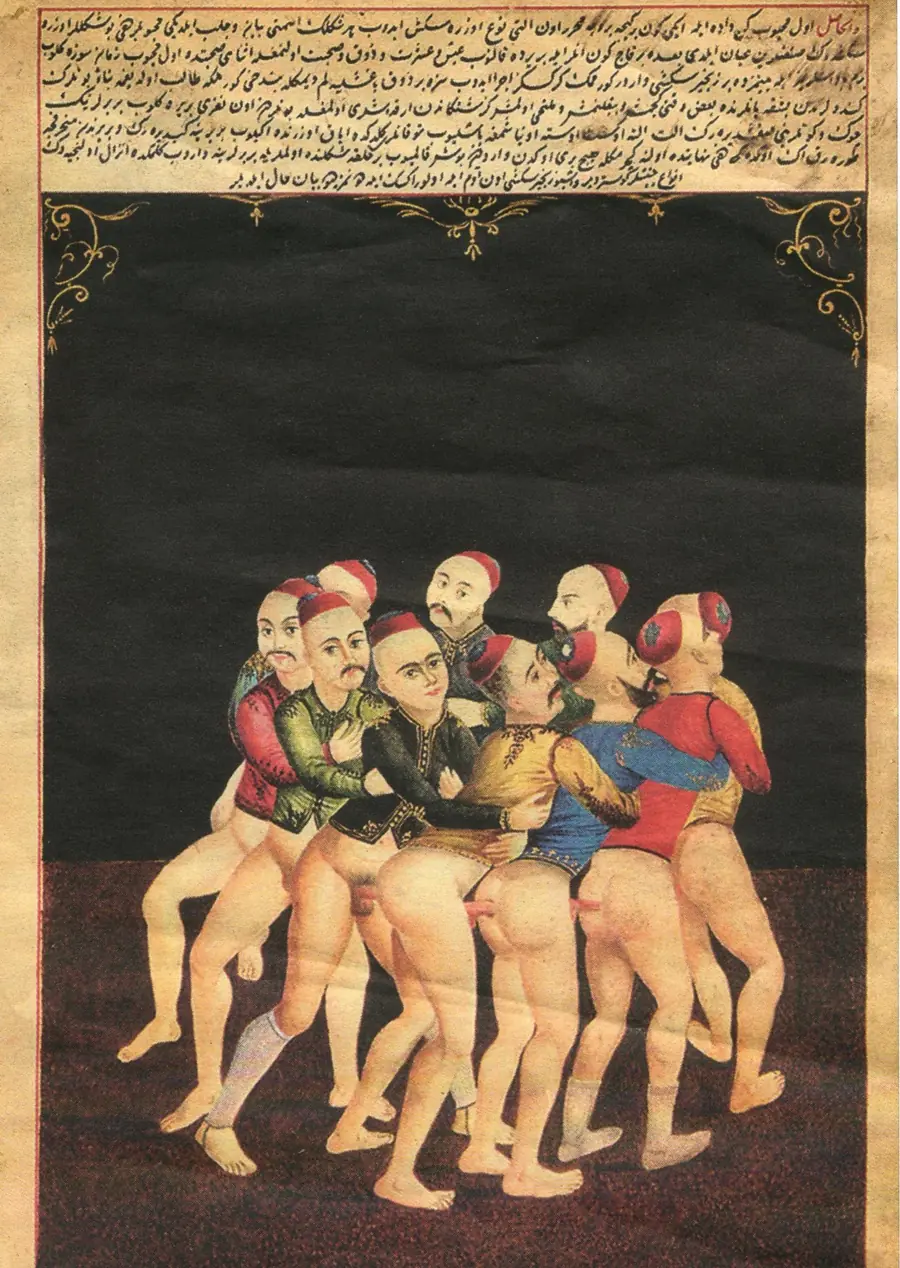
Screenshot of a post by @XiTui6673 on X — A 1773 Ottoman manuscript illustration
Screenshot: @XiTui6673 · Open original post ↗

Archive record

Captured
24 Oct 2026
Views at capture
17
Likes at capture
0
Replies
0
Reposts
1
Quotes
0

Source post publicly visible at capture. Posted 2026-10-15 18:49 (UTC+3). Metrics are snapshots taken on the capture date, not live counts.

Sources

Authors and country

Country is the archive’s own reading of public profile and language signals unless it says otherwise; “inferred” entries can be wrong. It describes an account, not a nation.

See this entry in the timeline Reader poll: who won the meme war? Today

Read this entry in other languages

Machine-assisted translations; check the original posts for exact wording.

简体中文

一幅 1773 年奥斯曼手抄本插画

中文账号 @XiTui6673 从 10-15 起就在土耳其网友帖下反复贴一幅古画:一群戴菲斯帽的男子首尾相连。维基百科“LGBT 与伊斯兰”条目将其标注为“1773 年奥斯曼土耳其手抄本”(维基共享资源图片,出处未经独立核实)。传播最广的一次是 @Successfulvqp 在 10-19 的转用,约 9.8 万浏览、2254 赞。画面为露骨的性场景。

繁體中文

一幅 1773 年鄂圖曼手抄本插畫

中文帳號 @XiTui6673 從 10-15 起就在土耳其網友帖下反覆貼一幅古畫:一群戴菲斯帽的男子首尾相連。維基百科「LGBT 與伊斯蘭」條目將其標註為「1773 年鄂圖曼土耳其手抄本」(維基共享資源圖片,出處未經獨立核實)。傳播最廣的一次是 @Successfulvqp 在 10-19 的轉用,約 9.8 萬瀏覽、2254 讚。畫面為露骨的性場景。

Türkçe

1773 tarihli bir Osmanlı el yazması minyatürü

Çince hesap @XiTui6673, 15 Ekim'den itibaren Türk kullanıcıların gönderilerinin altına eski bir resmi tekrar tekrar koydu: fesli erkeklerden oluşan birbirine bağlı bir zincir. Vikipedi'nin "LGBT people and Islam" maddesi resmi "1773 tarihli Osmanlı Türkçesi el yazması" olarak tanımlıyor (Wikimedia Commons dosyası; kaynağı bağımsız olarak doğrulanmadı). En çok görüntülenen kullanım, 19 Ekim'de @Successfulvqp'nin paylaşımı oldu (~98 bin görüntülenme, ~2,3 bin beğeni). Resim açık cinsel içeriklidir.

日本語

1773年のオスマン写本の挿絵

中国語アカウント@XiTui6673は10月15日から、トルコ人ユーザーの投稿の下に古い絵を繰り返し貼った。フェズ帽の男たちが一列につながった絵だ。英語版ウィキペディアの「LGBT people and Islam」記事では「1773年のオスマン・トルコ語写本」と説明されている(ウィキメディア・コモンズの画像。出所は独自に検証されていない)。最も見られた再利用は10月19日の@Successfulvqpの投稿で、約9.8万表示・約2300いいね。絵は露骨な性的描写を含む。

한국어

1773년 오스만 필사본 삽화

중국어 계정 @XiTui6673는 10월 15일부터 튀르키예 사용자들의 게시물 아래에 오래된 그림 한 장을 반복해서 올렸다. 페즈를 쓴 남자들이 줄지어 이어진 그림이다. 영어 위키백과 ‘LGBT people and Islam’ 문서는 이를 ‘1773년 오스만 튀르크어 필사본’으로 소개한다(위키미디어 공용 파일, 출처는 독립적으로 검증되지 않음). 가장 많이 본 재사용은 10월 19일 @Successfulvqp의 게시물로 약 9.8만 조회, 약 2300 좋아요. 그림은 노골적인 성적 장면이다.

Русский

Иллюстрация из османской рукописи 1773 года

С 15 октября китайскоязычный аккаунт @XiTui6673 раз за разом выкладывал под постами турецких пользователей старую картину: цепочку соединённых мужчин в фесках. В статье Википедии «LGBT people and Islam» она подписана как «османская турецкая рукопись 1773 года» (файл Wikimedia Commons; происхождение независимо не проверено). Самое просматриваемое использование — пост @Successfulvqp 19 октября (~98 тыс. просмотров, ~2,3 тыс. лайков). Изображение откровенно сексуального характера.

العربية

رسم من مخطوطة عثمانية تعود إلى 1773

منذ 15 أكتوبر، دأب الحساب الناطق بالصينية @XiTui6673 على نشر لوحة قديمة تحت منشورات مستخدمين أتراك: سلسلة من رجال يرتدون الطرابيش متصلين ببعضهم. تصفها مقالة ويكيبيديا «LGBT people and Islam» بأنها «مخطوطة تركية عثمانية من عام 1773» (ملف على ويكيميديا كومنز؛ لم يُتحقق من مصدرها بشكل مستقل). أكثر استخدام مشاهدةً كان منشور @Successfulvqp في 19 أكتوبر (نحو 98 ألف مشاهدة ونحو 2.3 ألف إعجاب). اللوحة ذات محتوى جنسي صريح.

Español

Una ilustración de un manuscrito otomano de 1773

Desde el 15 de octubre, la cuenta en chino @XiTui6673 publicó una y otra vez una pintura antigua bajo posts de usuarios turcos: una cadena de hombres con fez unidos entre sí. El artículo de Wikipedia «LGBT people and Islam» la describe como «manuscrito turco otomano de 1773» (archivo de Wikimedia Commons; procedencia no verificada de forma independiente). El uso más visto fue el de @Successfulvqp el 19 de octubre (~98 mil vistas, ~2,3 mil me gusta). La pintura es sexualmente explícita.

Français

Une illustration de manuscrit ottoman de 1773

Dès le 15 octobre, le compte sinophone @XiTui6673 a publié à répétition, sous des posts d’internautes turcs, une peinture ancienne : une chaîne d’hommes coiffés de fez reliés les uns aux autres. L’article Wikipédia « LGBT people and Islam » la légende « manuscrit turc ottoman de 1773 » (fichier Wikimedia Commons ; provenance non vérifiée de façon indépendante). La reprise la plus vue est celle de @Successfulvqp le 19 octobre (~98 k vues, ~2,3 k j’aime). La peinture est sexuellement explicite.

Deutsch

Eine Illustration aus einer osmanischen Handschrift von 1773

Ab dem 15. Oktober postete der chinesischsprachige Account @XiTui6673 immer wieder ein altes Gemälde unter Beiträge türkischer Nutzer: eine Kette aneinandergereihter Männer mit Fes. Der Wikipedia-Artikel „LGBT people and Islam“ beschriftet es als „osmanisch-türkische Handschrift von 1773“ (Datei auf Wikimedia Commons; Herkunft nicht unabhängig geprüft). Die meistgesehene Verwendung stammt von @Successfulvqp am 19. Oktober (~98.000 Aufrufe, ~2.300 Likes). Das Bild ist sexuell explizit.

About this archive

PATFLAG is a neutral, continuously updated archive of the China–Türkiye online dispute around the Patrick Star flag image: public posts, screenshots and sources, in 11 languages. Colors mark the context of individual public posts, not the position of an entire country. Insulting language in original posts is kept verbatim so the record stays complete; inclusion is not an endorsement of any account. Full timeline